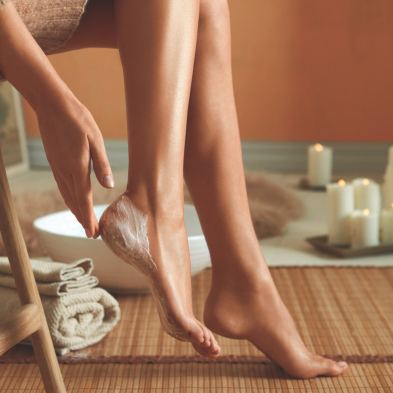






- Why do you get dry heels and rough skin on your feet
- Home foot care as part of your daily beauty routine
- How to gently remove rough skin from your heels
- How to gently remove rough skin from your heels
- How to soften your heels at home and which products to choose
- Regular foot care at home rather than one-off treatments
The skin on our feet endures more every day than we realise: shoes, friction, dry air, showers, walks, workouts, open sandals in summer and thick socks in winter. Yet foot care often ends up at the bottom of the beauty to-do list: face, hair, hands – yes, but we only remember our heels when they’ve already become rough, dry or started catching on fabric.
Find out more about the skin’s protective barrier and how to care for it during periods of dryness, redness and flaking.
But achieving soft heels isn’t just about a monthly visit to the salon. More often than not, the results come down to simple at-home habits: gentle cleansing, regular moisturising, gentle exfoliation and using the right products. Let’s explore why dry heels can still appear even with regular care, how to remove rough skin from your heels without causing harm, how to soften your heels at home, and how to ensure that heel care becomes a comfortable part of your routine rather than a one-off emergency treatment.
Dry heels and why the skin on your feet loses its softness
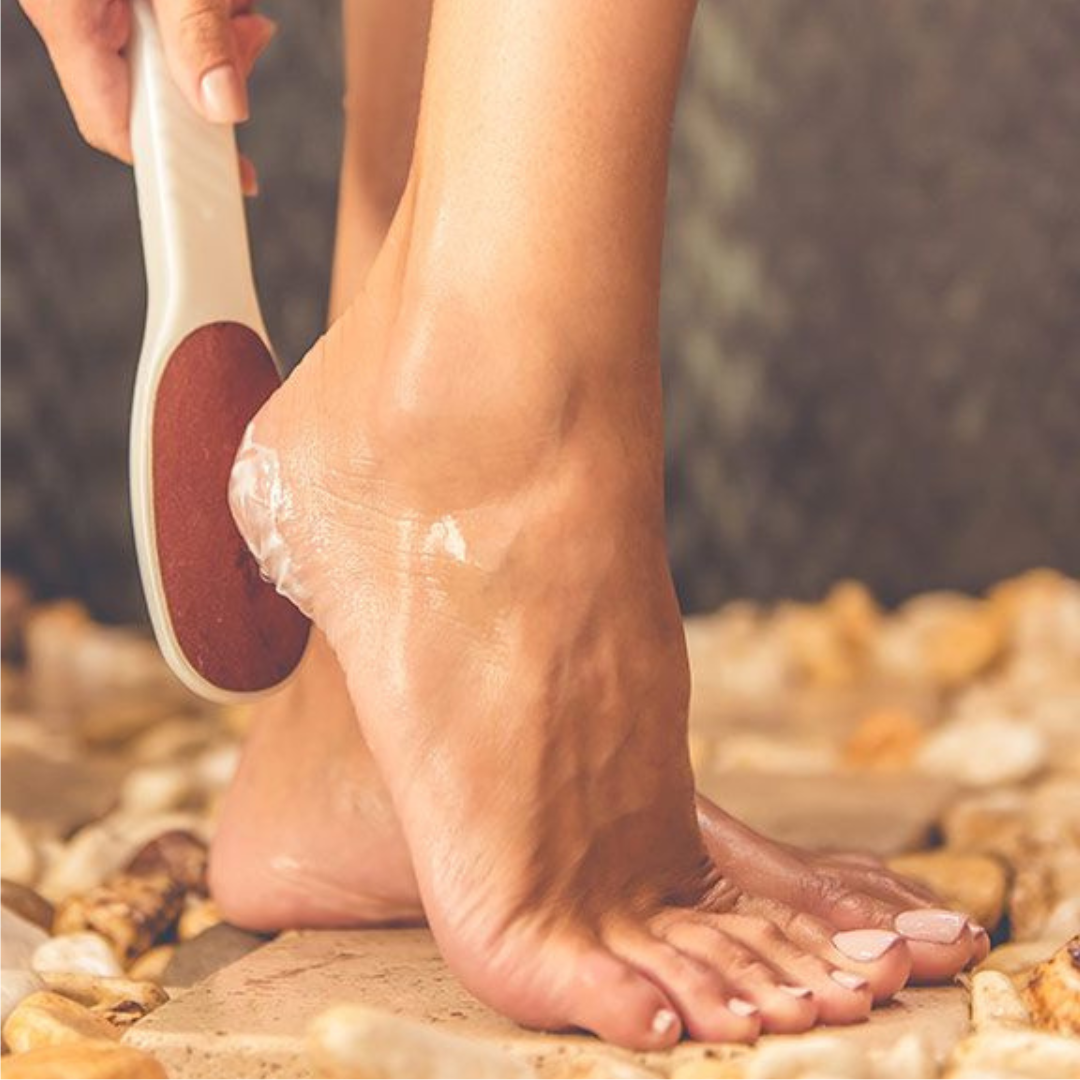
When your heels are dry, your first instinct is to quickly rub them with a pumice stone or slather on the richest cream you have at home. But before you do anything, it’s important to understand what’s causing your dry heels. Sometimes it’s not down to a single factor, but a combination of factors: the skin becomes dry, a thick layer of dead skin builds up on top, and constant pressure and friction cause the heels to become rough.
Dry heels are most often caused by a lack of regular moisturising and protection for the skin on the feet. There are fewer sebaceous glands on the feet, so they do not receive the same natural ‘nourishment’ as, for example, the skin on the face. If you take a hot shower every day, wear open-toed shoes, frequently use a coarse foot file or forget to apply cream, dry skin on the heels will appear quite quickly.
There are several common reasons why heels become dry:
Footwear and friction.Tight, stiff or open-toed shoes increase pressure on the feet. In summer, sandals and flip-flops can cause dryness due to constant contact with dust, air and surfaces. That is why foot care is particularly important in summer: the skin needs extra moisture and protection.
Too aggressive a treatment. If you frequently scrub your heels with a coarse pumice stone or try to remove the entire thick layer in one go, your skin may start to react defensively and become even rougher. This is how rough heels develop, and sometimes you get the feeling that no matter how much you treat them, the results disappear quickly.
Lack of moisture after a shower. Water alone does not keep the skin moisturised for long. After a shower, the moisture evaporates quickly, especially if you don’t apply cream. That is why dry skin on the heels is a common problem for those who do not look after their feet regularly.
Seasonality. Heel care in summer differs from that in winter. In summer, the skin dries out due to open-toed shoes, the heat and frequent washing of the feet, whereas in winter, heel care is necessary because of the dry air, heating, closed shoes and temperature fluctuations.
The condition of the skin and the body.Sometimes the question of “what dry heels are telling us” is genuinely important. If very dry skin on your heels is accompanied by deep cracks, itching, inflammation or pain, or if the skin on your feet is constantly cracking, it is best not to rely solely on cosmetic products but to consult a dermatologist or podiatrist.
If you notice that your heels are dry and cracked, don’t start by scrubbing them too hard. First, you need to restore the skin’s softness and elasticity, and only then should you gently treat the rough patches. Dry heels aren’t always a sign of “neglected care”. More often than not, it’s a sign that the skin on your feet isn’t getting enough regular moisturising, gentle care and protection from friction. For heel care to work, it’s important not just to get rid of the dryness, but to understand why it keeps coming back.
Foot care at home as part of your daily beauty routine
.png)
Looking after your feet at home doesn’t have to take much time. The most effective approach isn’t complicated, but consistent. When we talk about foot care, we’re not just referring to pedicures, but also to the little things you do every day to keep your skin healthy.
You can establish a simple routine for daily foot care:
Cleansing without drying out the skin.Use a gentle gel or soap that doesn’t leave your skin feeling tight. Water that’s too hot and harsh cleansers can make dryness worse, especially if your feet are already very dry.
After-shower cream. Apply the product not only to your heels, but to the whole foot: the pads of your toes, the sides, and any areas where your shoes rub against your skin. Caring for the skin on your heels will be more effective if you don’t just focus on the dry areas, but treat the whole foot.
Night-time skincare.The cream works particularly well in the evening, as once you’ve applied it, you won’t be putting your shoes on or walking around the house for a long time. To soften your heels, you can apply a thicker cream and wear cotton socks for 20–30 minutes, or overnight if that’s comfortable for you.
Regular checks of dry areas.If you notice your skin starting to flake or feel rough, it’s best to moisturise straight away rather than wait until your heels become very dry.
Comfortable shoes and socks. Even a good cream isn’t always enough if your shoes constantly rub against the same areas. For everyday wear, it’s best to choose shoes in which your feet don’t slip and aren’t subjected to excessive pressure.
Caring for your heels is particularly important after activities that can dry out the skin: long showers, swimming, walking in open-toed shoes, trips to the beach or vigorous exercise. On days like these, it is best to apply the cream immediately after cleansing.
The more regularly you moisturise your skin, the less often you’ll find yourself wondering how to get rid of rough heels at home quickly and in one go.
How to remove calluses from your heels without damaging your skin
When your heels become rough, you want to restore their smoothness as quickly as possible. But the question “how to remove rough skin from your heels” shouldn’t lead you to resort to harsh methods. The skin on the feet is thicker than on many other parts of the body, but it can still be damaged. If you remove the rough layer too vigorously, there is a risk of irritation, soreness and even more severe dryness.
Proper foot care at home is all about taking it step by step. The aim is not to ‘scrub away’ the skin, but to gently remove the excess, thickened layer and immediately restore moisture. You need to be particularly careful if the skin on your heels is very dry or if small cracks have already appeared.
A safe circuit looks like this:
First, soften the leather. A warm foot bath or shower helps prepare your feet for treatment. The water should be warm, not hot. Five to ten minutes is enough to soften the skin and make it more receptive to a nail file or pumice stone.
Use a soft nail file or pumice stone, but don’t overdo it.If you’re wondering how to remove calluses from your heels, don’t try to remove them all in one go. It’s better to treat dry areas with gentle strokes than to rub one spot for too long.
Do not cut the skin with the blades. A home pedicure shouldn’t turn into a risky procedure. If you file away the rough layer too deeply, it’s easy to damage the skin. If you have severe calluses, deep cracks or pain, it’s best to see a specialist.
Be sure to apply cream after exfoliating. This is the key step that locks in the results. If you remove dead skin from your heels without moisturising your feet, the dryness will quickly return.
Don’t carry out intensive treatment every day. In most cases, once or twice a week is sufficient.
The skin on the toes and the sides of the feet can be more sensitive, so it is particularly important not to apply pressure or use tools that are too rough in these areas.
How to soften your heels at home using the right products
.png "What can I use to treat dry heels")
When dryness sets in, the most common question is simply: what should I use on dry heels? It’s important to realise that not every body cream is suitable for the feet. The skin on the heels is thicker, so it often needs richer textures and ingredients that not only leave it feeling soft but also help to lock in moisture.
If you have very dry heels, choose products that work in several ways at once: they moisturise, soften, support the skin’s protective barrier and reduce roughness.
What to look out for in the ingredients:
Urea. One of the most popular ingredients for caring for dry feet. In moderate concentrations, it helps to moisturise the skin and soften rough patches. If you have very dry skin on your feet, a cream containing urea can be a good base for your evening skincare routine.
Glycerin. It helps to draw moisture into the skin and keep it there. It works well in daily moisturisers, especially if the dryness is still mild and there are no obvious cracks.
Oils and butters. Shea butter, cocoa butter, coconut oil, almond oil and other nourishing ingredients create a soothing sensation and help to soften the skin. They are particularly pleasant to use as part of your night-time skincare routine.
Panthenol and allantoin. Suitable for skin that looks irritated, dry or is sensitive to friction. These ingredients are often found in restorative creams.
Acids in foot care products. Lactic, salicylic or other acids can help with gentle exfoliation, but it is best to use them sparingly and follow the instructions. If your skin is chapped or you experience any discomfort, you should exercise caution when using active exfoliants.
For cracked heels, it is better to choose restorative products containing moisturising and emollient ingredients rather than harsh ‘super-scrubs’. If the cracks are deep, painful, slow to heal or the skin becomes inflamed, cosmetic care should not replace a consultation with a specialist.
Caring for your heels at home as a regular habit, rather than a one-off treatment
The main mistake in foot care is only thinking about it once your skin has already become very dry, rough or started to crack. At that stage, you’re left having to ‘rescue’ your feet rather than maintaining their condition. It’s much easier to prevent your skin from becoming severely dry than to try and smooth out rough heels in a single evening.